

These Chemistry exam mistakes can cost students marks every year
Introduction
Exams may not be the most fun topic to speak about, students stress at it’s mention, parents constantly asking when the next paper is, teachers conducting additional classes for students, everyone’s in a rush, and that rush comes with O/L, AS & A/L the place where inaccuracy can cost the most important marks, Why? Students do not have confidence in answers, use weak scientific language, fail in showing steps in calculations, incomplete diagrams, and confuse similar concepts. These chemistry exam mistakes can cost students marks every year.
Succinctly,
rectifying these mistakes require a cumulative effort, but a lot of which weighs on the student. The most important aspect is the way an answer is conveyed using keywords, correct units, enough significant figures, calculation steps, balancing steps, steps necessary to conduct experiments. All these must Tetris fall into place, that’s what they really want that can earn you marks.
Every year when chemistry exam results are released, a familiar narrative unfolds.
Students who worked hard, suddenly feel they’ve fallen short at the exam and this has parents wondering “what went wrong?”
It’s not a lack of effort it can even not be a lack of understanding.
Mistakes, small, repeated, predictable mistakes, that quietly tear away marks.
1. It starts with the question
“What am i looking at?”
“Where do i start?”
“I’m missing some information, how am i supposed to answer this?”
Those are questions students spiral through in their head when they sit for the exam and bamboozled by the problems presented in front of them. The student would some times see the topic and jump to writing, only to realize too late that the question required something slightly different. Definitions instead of an explanation for example.
Examination papers are built in a way to assess certain learning outcomes which are based on of course content, learning activities, and assessments in every unit. Some of these may test your literacy skills, intellectual abilities and jargon in the field of chemistry.
Writing fast is not what makes you a strong student, but being careful.
For example: Identify, State, Describe, Explain, Calculate, Deduce, Suggest etc… Are some of the key words in any subject examination question to occur frequently as they are the base of what the examiner is asking.
This is the start to structuring answers.
In Chemistry when brought with a question there is always a scenario, something to do with an elements characteristics and behaviours under conditions.
Each time, especially in O/L, answers are very straight forward. Meanwhile in A/L, it’s the same thing with certain questions requiring you to add a little more.
Chemistry is like Mathematics, where Elements are your Numbers.
2. Confusing keywords
It’s a common thought “I studied this… But i still don’t get it”
Closely related concepts are may get confused by students, it’s not entirely a memory thing.
For example:
Exothermic and Endothermic
Oxidation and Reduction (Redox)
Anode and Cathode
Under Exam pressure, these mistakes can become costly. When you take a look at questions regarding these, they are more often than not very straight forward.
And an average learner, can be confused with this kind of jargon.
3. Articulate for an added advantage
Like every subject Chemistry has its Language. Each word is due to an assessment task examiners manufacture often wanting you to utilize in writing.
For Example:
When writing answers it is generally fine to write in the Layman manner but what happens when the chemistry words are used in questions?
Don’t you feel undermined?
Hence it is in your best interest as a student (or parent who wants to help the child) to use these terms when speaking, it may seem odd to people who haven’t heard these words but it is a form of improving knowledge.
4. Workings matter more than the answer
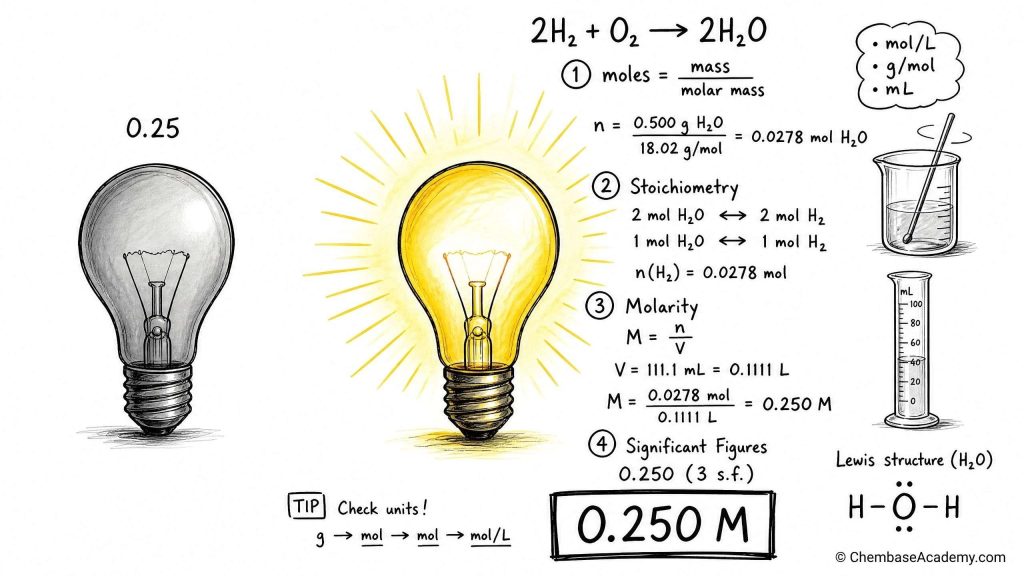
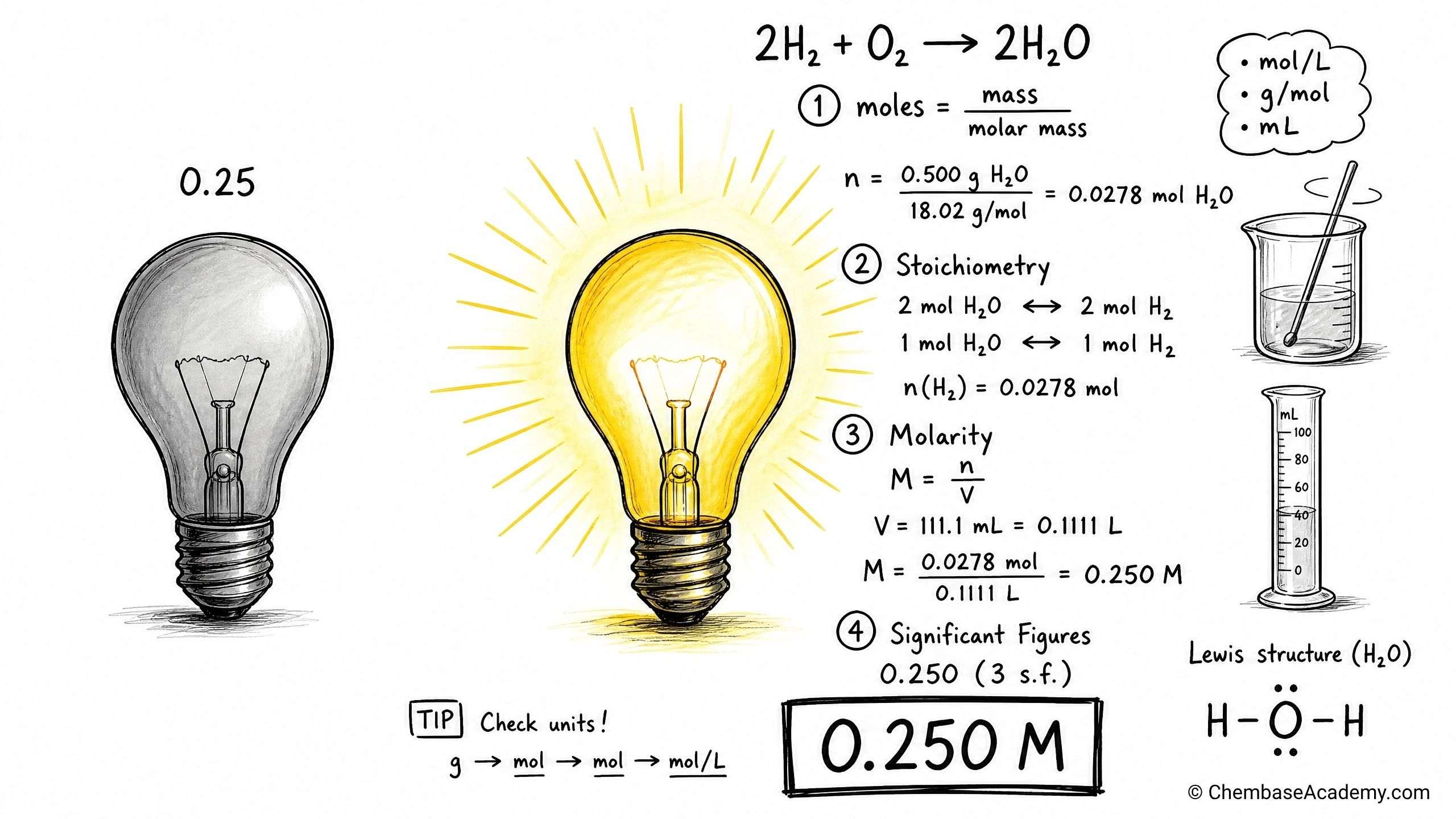
Odd is it not, why would workings matter more than the final answer?
The learning outcomes recommend student to understand how the answers are derived and to derive them in practice.
A correct method with a small error can still earn marks.
A correct answer with no method may earn none.
This is not Chemistry specific, all subjects that require problem solving push students to show their workings and earn marks for thinking.
5. Presentation matters, make it CLEAR
A diagram without labels.
A graph without units.
A set of apparatuses drawn from memory missing key details.
Some exam questions even require you to: “Write a suitable title” and you get a mark.
Axis labeled, another mark.
Suitable numerical values for data precision, another mark.
Type of graph used, Line, Bar, scattered, Pie etc… , another mark.
The question is literally built to earn You marks.
6. And then the Simplest Mistake of all
Questions Left Blank
Of course the pressure of time gets to everyone, whatever they don’t know they leave and come back to it later.
Or don’t.
You could look in other questions for help in answering the one you cannot do.
Everything could have some relation.
But not attempting the question at all, is always a problem as there is potential marks, even one or two, left out.
7. Finally, the paper is submitted… Unchecked
“Last 10 minutes, Please Check your Name, student number are all written” Last few minutes of any exam, you are guaranteed to hear something like this.
These few minutes are often wasted. But this is were some of the marks can be recovered.
It is very possible, that while being quick to write, you can misinterpret certain words or completely miss something small that should help for a correcter answer.
Don’t stress it. Always use the time you have focusing on nothing but the paper.